John Ternus’s leadership marks a potential turning point for Apple as the company navigates the post-Jony Ive era of hardware development. For years, observers wondered if Apple could maintain its aesthetic edge without its legendary design chief at the helm. Today, the transition toward a more engineering-led culture suggests a subtle evolution rather than a total departure from past norms. You likely noticed the recent focus on utility, repairability, and thermal performance in newer MacBooks. These shifts reflect the priorities of an executive who rose through the hardware engineering ranks. Furthermore, understanding this transition requires a deep dive into how Apple balances its iconic minimalism with the practical demands of modern users. This analysis explores how the shift in authority reshapes the products you use every day, moving from purely form-driven choices to a hybrid model favoring performance and functionality.
Understanding the impact of John Ternus’s leadership
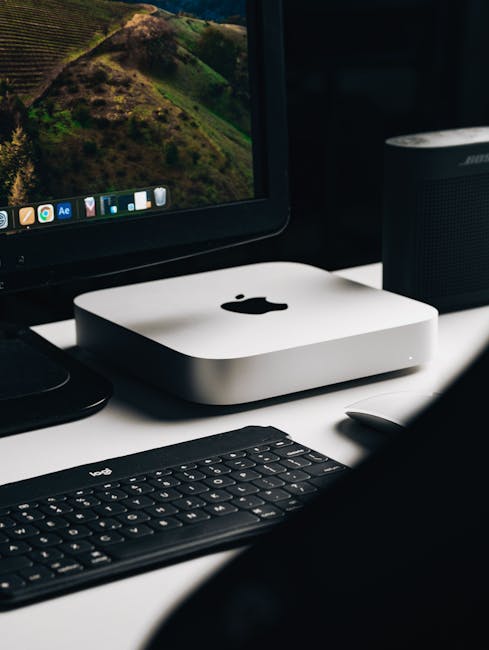
In practice, the transition from a design-first culture to an engineering-first culture represents a significant pivot in corporate identity. Under previous regimes, industrial design often dictated internal specifications, sometimes creating constraints for engineers. However, Ternus prioritizes systemic efficiency and modularity. This approach aligns with broader industry trends where users demand longer product lifecycles and sustainable designs. As a result, Apple has reintroduced ports, improved thermal management, and simplified internal layouts. You might have noticed the return of MagSafe and the HDMI port on the MacBook Pro. These were not random decisions, but calculated responses to professional user feedback. Furthermore, this shift indicates that the current leadership values cross-functional harmony over singular visionary dictate.
The hardware engineering transition
When you evaluate the recent hardware iterations, the difference in design philosophy becomes clear. Before this shift, Apple often sacrificed connectivity for ultra-thin profiles. Today, we see a more pragmatic balance. In addition, the company now emphasizes thermal headroom to support Apple Silicon, which requires more internal space than previous Intel-based architectures. What most guides miss is that internal layout complexity actually decreased, making these machines more serviceable for technicians.
Key takeaway: Apple is currently trading extreme slimness for increased functional performance and internal accessibility.
Shifting design priorities in the post-Ive era
Historically, the design studio held absolute veto power over engineering projects. Under John Ternus’s leadership, this dynamic has evolved into a more collaborative framework. According to Bloomberg (2023), Apple has increasingly focused on internal component standardization to streamline supply chain resilience. This change benefits both the bottom line and the user. Furthermore, by reducing component variety, engineers can focus on refining specific modules rather than managing thousands of unique parts. If you are a practitioner in this space, you recognize that standardization is the enemy of innovation, yet it is the bedrock of reliability. Therefore, Apple is likely accepting a slower pace of visual reinvention in exchange for higher manufacturing stability.
Comparing the design philosophies
You can see the difference by comparing the eras of extreme minimalism versus the current focus on feature-rich hardware. The following table highlights these shifts in priority.
| Feature | Previous Era (Form-led) | Current Era (Performance-led) |
|---|---|---|
| Port selection | Minimal (USB-C only) | Expanded (SD, HDMI, MagSafe) |
| Thermal design | Compromised for thinness | Optimized for high workload |
| Repairability | Glue-heavy, proprietary | Increasing modularity |
Key takeaway: The design language is maturing from a pursuit of visual purity toward a focus on long-term hardware utility.
The role of Apple Silicon in design evolution
As a practitioner, you know that the silicon powering a device determines its physical footprint. Because Apple now designs its own chips, it has more freedom to optimize heat dissipation and battery placement. Consequently, the design team no longer waits for third-party chip manufacturers to dictate the physical constraints of a laptop. Furthermore, the integration of memory and storage on the chip package allows for smaller mainboards, which Apple uses to increase battery capacity instead of just shrinking the shell. If you examine the internal schematics of the M3 chips, you see how these design choices facilitate better thermal management. A common mistake here is assuming that the external look is all that matters, when the true innovation lies in the efficiency of the internal thermal pathways.
Optimizing for thermal performance
When you build high-performance systems, managing the heat envelope is the most difficult challenge. John Ternus’s leadership emphasizes the use of advanced airflow management to sustain peak speeds. In the past, thin devices would throttle quickly under load. Today, even base models handle sustained video rendering tasks with ease. This is why you see slightly thicker chassis designs in recent years; physics requires space for heat exchange. If you are building custom rigs, you can simulate these thermal paths using tools like SolidWorks to understand how component density impacts performance.
// A simplified logic flow for thermal management monitoring
function monitorTemperature(coreTemp) {
  const threshold = 85;
  if (coreTemp > threshold) {
    console.log("Throttling clockspeed for thermal safety");
    return "PERFORMANCE_LIMIT";
  }
  return "OPTIMAL";
}
console.log(monitorTemperature(90));
Key takeaway: Internal chip architecture has replaced industrial design as the primary constraint for Apple’s device dimensions.
Looking ahead to the next generation
Looking forward, you should expect this trend toward functional hardware to continue. Apple is not abandoning its minimalist aesthetic, but it is refining it to include more utilitarian features. In addition, the company is doubling down on AR and VR devices, which require a completely different set of design constraints than laptops or phones. These new devices prioritize comfort and weight distribution, showing that the design team is adapting to human ergonomics rather than just looking at the object on a desk. Furthermore, as AI tools become more integrated into hardware, the demand for local processing power will likely drive even more changes in internal architecture. Therefore, expect future hardware to look like a direct extension of its internal components, reflecting the efficiency that Ternus advocates.
Implementing hardware modularity
If you want to understand how this shift manifests, look at how the company approaches modularity. Follow these steps to analyze a piece of modern hardware for its design philosophy:
- Open the device’s technical specifications and identify the accessibility of core components.
- Compare the board density to previous generations using web development tools that analyze data visualization of hardware maps.
- Observe the cooling interface and the ratio of air volume to chip surface area.
- Note the quantity of specialized versus off-the-shelf screws, which indicates the level of serviceability.
Key takeaway: Design evolution is now driven by the requirements of the internal silicon and the user’s need for longevity.
Conclusion
John Ternus’s leadership confirms that Apple is entering a phase of maturity where utility holds equal weight with aesthetics. You can see this in the thoughtful reintegration of ports, the prioritization of thermal management for Apple Silicon, and the subtle improvements in component serviceability. While the company still produces some of the most visually refined hardware on the planet, it no longer pursues minimalism at the cost of functionality. As a result, the user experience has improved for professionals who need reliable, high-performance tools. This shift suggests a balanced future where technology serves the user’s needs first and foremost. If you want to stay ahead of these trends, keep an eye on how Apple balances its manufacturing processes with its iconic design language. Take the time today to examine your own device’s internal layout to see if it prioritizes form or function.
Cover image by: Alan Quirván / Pexels