A high AC bill often seems like an unavoidable tax on summer comfort, but the reality is that several hidden technical factors are driving those costs upward. You might assume the primary culprit is simply the record-breaking heat outside, yet the way your cooling system interacts with your home architecture and local climate tells a more complex story. In this explainer, we will explore the fundamental mechanics of heat transfer, the impact of mechanical degradation on your utility meter, and the environmental variables that force your unit to run longer cycles. By understanding the intersection of thermodynamics and appliance efficiency, you can identify why your monthly expenses are spiking and where the most significant inefficiencies lie. We will preview the role of insulation, the importance of seasonal energy efficiency ratings, and the common misconceptions about thermostat management that lead to unnecessary financial strain.
How thermodynamics influences your cooling costs
To understand why your expenses climb, you must first recognize that an air conditioner does not actually create cold air. Instead, it is a heat removal machine. It works on the principle of the refrigeration cycle, using a chemical refrigerant to absorb heat from the inside of your home and dump it outside. When the temperature difference between your indoor living space and the outdoor environment increases, the system must work exponentially harder to move that heat. This process is governed by the laws of thermodynamics, specifically the second law, which states that heat naturally flows from a warmer area to a cooler one. Your AC is essentially fighting a constant uphill battle against the natural tendency of the outside heat to enter your cooled space.
In practice, I have seen systems lose nearly 30 percent of their cooling capacity simply because of a neglected capacitor that was failing to provide enough torque to the blower motor. Furthermore, when the humidity levels rise, your AC must work double duty. It is not just lowering the air temperature, but it is also pulling moisture out of the air. This process requires significant energy because the phase change of water from vapor to liquid releases latent heat, which the evaporator coil must then absorb. According to the U.S. Energy Information Administration (2023), cooling accounts for roughly 19 percent of the average household electricity bill in warmer climates, largely due to this constant battle against heat and humidity.
Sensible heat versus latent heat
The distinction between sensible and latent heat is vital for understanding your utility costs. Sensible heat is the temperature change you can see on a thermometer, while latent heat is the energy required to manage humidity. If you live in a high-humidity region, your AC spends a massive portion of its energy cycle dehumidifying before it even begins to lower the room temperature. This is why on a muggy 85-degree day, your unit might run longer than on a dry 95-degree day. Consequently, many modern homeowners are turning to specialized lifestyle adjustments and smart dehumidifiers to offload this work from their primary HVAC system, as traditional AC units are relatively inefficient at moisture removal compared to dedicated appliances.
Key takeaway: Your air conditioner functions as a heat pump that works harder as the temperature gradient and humidity levels between the indoors and outdoors increase.
Why mechanical efficiency determines the monthly price
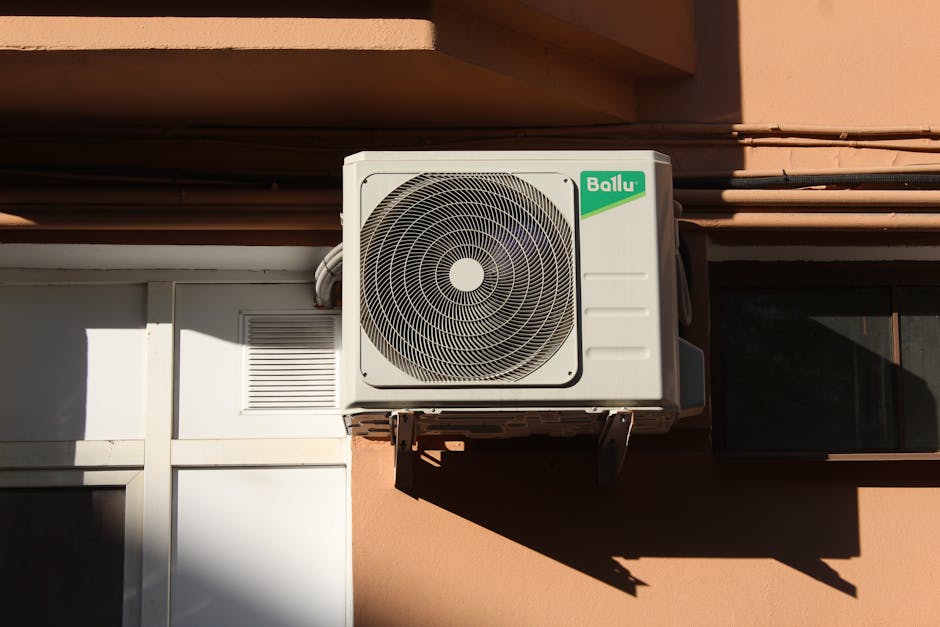
The mechanical health of your unit is perhaps the most significant variable under your control. Every air conditioning system has a Seasonal Energy Efficiency Ratio (SEER) that dictates how much cooling it provides per watt of electricity consumed. Older units often have SEER ratings between 10 and 13, whereas modern high-efficiency models can reach 20 or higher. As the system ages, components such as the compressor and the fan motor begin to degrade, drawing more current to achieve the same cooling output. According to a 2024 Energy.gov analysis, switching to a high-efficiency air conditioner can reduce energy use by 20 to 50 percent compared to older models, illustrating how much money is lost through mechanical obsolescence.
From experience, homeowners often overlook the impact of restricted airflow on their SEER performance. If your air filter is clogged or your outdoor condenser unit is surrounded by overgrown vegetation, the system cannot dissipate heat effectively. This causes the compressor to run at higher pressures and temperatures, which drastically increases power consumption and shortens the lifespan of the equipment. Moreover, the 2023 transition to SEER2 testing standards has highlighted how much energy is typically lost in the ductwork of a standard residential home, often totaling 20 to 40 percent of the total cooling capacity.
The impact of SEER2 ratings on performance
The introduction of SEER2 standards has forced manufacturers to account for the static pressure of ductwork, which provides a more realistic view of how a unit performs in a real house rather than a laboratory. When you look at your bill, you are paying for the energy used at the compressor, but you might only be receiving a fraction of that cooling in your bedroom. If your ducts have leaks or are poorly insulated, the cold air is essentially being dumped into your attic or crawlspace. This mismatch between energy input and cooling output is a primary reason for a persistent high AC bill that does not seem to respond to minor thermostat adjustments.
Key takeaway: Mechanical degradation and low SEER ratings create a gap between the energy you pay for and the actual cooling comfort you receive.
Structural leaks and the impact of heat gain
Your home is the envelope that contains the conditioned air, and if that envelope is porous, your AC bill will inevitably skyrocket. Heat gain occurs through three primary methods: conduction through walls and windows, convection through air leaks, and radiation from the sun. In many older homes, the insulation in the attic has settled over time, losing its R-value and allowing heat to radiate directly through the ceiling. Additionally, tiny gaps around windows, doors, and electrical outlets act like a fleet of tiny exhaust fans, pulling your expensive cold air out and dragging hot, humid air in. This is often referred to as the stack effect, where pressure differences cause air exchange that your AC cannot keep up with.
What most guides miss is that your home is a pressurized vessel, and pushing cold air in without addressing the return flow often forces conditioned air out through attic cracks. In addition, the color and material of your roof play a massive role in how much heat your home absorbs. A dark asphalt shingle roof can reach temperatures over 150 degrees Fahrenheit, creating a massive thermal reservoir right above your living space. To combat this, some practitioners use tools like a FLIR ONE thermal camera for smartphones to visualize exactly where heat is entering the structure, allowing for targeted sealing and insulation efforts.
Using thermal imaging to find energy leaks
Thermal imaging reveals the invisible failures in a home’s structure. When you use a device like a FLIR camera during a hot afternoon, you will often see “hot spots” around top-plate penetrations where wires enter the attic or near recessed lighting fixtures. These areas are major contributors to a high AC bill because they allow a constant exchange of air. Sealing these gaps with spray foam or weatherstripping is often more cost-effective than upgrading the AC unit itself. Furthermore, improving your productivity in home maintenance by addressing these structural flaws creates a permanent reduction in energy demand that persists for the life of the building.
Key takeaway: Building envelope failures allow heat to infiltrate your home through conduction and air leaks, forcing the AC to cycle more frequently.
Behavioral patterns and control system failures
The way you interact with your thermostat is the final piece of the energy puzzle. A common mistake here is the belief that “cranking” the thermostat down to 60 degrees will cool the house faster. Air conditioners are binary systems; they are either on or off. Setting a lower temperature does not increase the speed of cooling, it simply tells the unit to run for a longer duration. This often leads to overshooting the desired temperature and wasting electricity. Moreover, leaving the AC off all day while you are at work and then turning it on when you return can actually be more expensive than maintaining a moderate temperature, as the system must work for hours to remove the heat that has soaked into the walls and furniture.
Technological solutions like smart thermostats from brands like Ecobee or Nest can mitigate these behavioral errors. These devices use occupancy sensors and geofencing to adjust temperatures based on whether anyone is actually home. They can also take advantage of “load shifting,” which involves cooling the home slightly more during the morning when electricity rates and outdoor temperatures are lower, then allowing the temperature to rise during the peak afternoon hours. This reduces the strain on the electrical grid and lowers your costs if your utility provider uses time-of-use pricing models.
Smart thermostats and load shifting strategies
Load shifting is a strategy used by professional energy managers that is now available to the average homeowner. By using a smart controller like the Sensibo Sky for older window or split units, you can automate your cooling cycles to align with the most efficient times of day. For example, pre-cooling your home by two degrees at 10:00 AM allows the building’s thermal mass to stay cooler longer into the afternoon. Consequently, the AC does not have to work during the 4:00 PM peak when the outdoor temperature is at its highest and the compressor efficiency is at its lowest. This strategic approach turns your home into a thermal battery, storing “coldness” when it is cheapest to produce.
Key takeaway: Intelligent thermostat management and load shifting can significantly reduce energy costs by aligning cooling cycles with peak efficiency times.
Summary of cooling cost drivers
Understanding the reasons behind a high AC bill requires a holistic look at your home’s mechanical, structural, and behavioral environment. From the basic laws of thermodynamics that dictate heat movement to the specific SEER2 ratings of your hardware, every component plays a role in your monthly utility statement. As we have explored, mechanical maintenance is not just about preventing a breakdown, but about ensuring that the system operates at its designed efficiency. Similarly, the structural integrity of your home’s insulation and air sealing acts as the first line of defense against the relentless summer sun.
The single most important takeaway is that your cooling bill is the result of a system-wide interaction, not just a single appliance. By combining regular mechanical checkups with smart technology like automated thermostats and targeted structural improvements, you can regain control over your energy consumption. Start by checking your air filters and inspecting your attic insulation, as these are the most accessible points of failure. Transitioning to a proactive maintenance mindset will not only lower your immediate costs but also extend the life of your expensive HVAC equipment, providing long-term financial benefits for years to come.
Cover image by: Paolo Rossa / Pexels