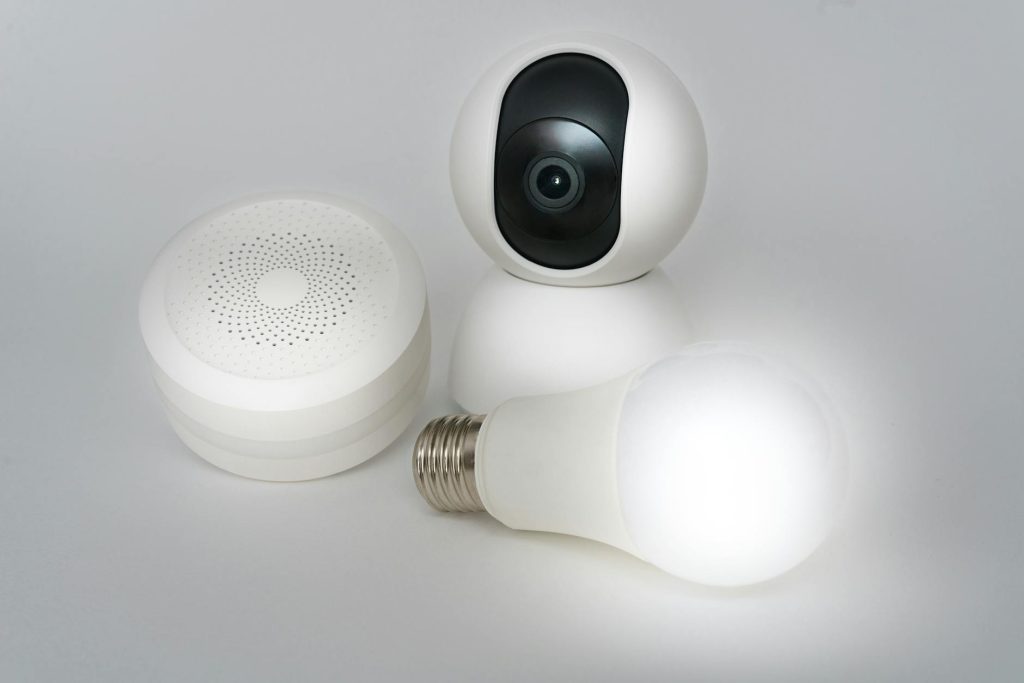
Many homeowners wonder if smart home devices spying on their daily routines is a real threat or just paranoia. The short answer is that while these devices are not actively wiretapping you like a Hollywood movie, they do constantly gather telemetry, audio snippets, and usage patterns. Most of this data collection occurs to make the products work better and target you with personalized advertisements. However, this perpetual digital footprint poses a significant risk if you do not configure your hardware properly. In this article, you will learn how these devices handle your information, what risks you face, and how to stop unauthorized data collection. By changing a few default settings and isolating your network, you can enjoy modern convenience without sacrificing your household privacy to corporate data centers.
What is actually happening under the hood
To begin with, smart speakers, cameras, and thermostats do not continuously upload raw audio or video feeds to the cloud. Doing so would overwhelm residential internet bandwidth and cost the manufacturers billions of dollars in storage and processing fees. Instead, these devices remain in a low-power, passive state while they listen or watch for a specific trigger. This trigger is usually a physical button press, a motion detection event, or a specific phrase like a wake word.
Therefore, the system processes your audio locally on a small integrated circuit until it detects the trigger. Once triggered, the device establishes an encrypted connection to an external server and begins streaming the data for cloud analysis. This is where the actual voice recognition or video analysis occurs, as small IoT microchips lack the computational power to process complex machine learning algorithms.
How wake words trigger recording
For instance, smart speakers require constant local processing to recognize their activation commands. However, this local processing is far from flawless, resulting in accidental activations that capture private conversations. According to a study by researchers at Northeastern University (2023), smart speakers misinterpret conversational words as their wake word up to 19 times per day. Consequently, these accidental triggers upload private discussions to corporate servers, where human reviewers sometimes listen to the audio clips to improve the voice-recognition algorithms.
Key takeaway: Smart devices run local detection loops that only upload data to the cloud when triggered, though accidental activations occur frequently during normal conversation.
Why smart home devices spying concerns are valid
Consequently, you must understand that concerns about smart home devices spying are not baseless. While tech companies claim they respect user privacy, their business models often rely heavily on data monetization. The privacy policy agreements that you accept during device setup frequently grant these corporations broad permissions to collect, analyze, and share your behavioral data with third-party partners.
Indeed, many vendors prioritize ease of use over robust protection mechanisms. This design philosophy leaves many consumer gadgets vulnerable to firmware exploits and credential stuffing attacks. If a malicious actor gains access to your smart camera network, they can view your private life in real time without your knowledge.
The reality of acoustic eavesdropping
Furthermore, the security practices of smart device manufacturers vary widely across the industry. According to a consumer privacy report by the Mozilla Foundation (2022), over 80% of smart home brands fail to meet basic security standards regarding data encryption and retention policies. This lack of industry standardization means that buying a cheap, off-brand smart plug could introduce major vulnerabilities into your home network.
Key takeaway: The primary threat of smart devices comes from loose corporate data-sharing policies and weak hardware security configurations rather than active government wiretapping.
What data tracking costs you in privacy
In addition, the financial cost of purchasing smart hardware is only the initial transaction. You also pay a continuous toll in the form of your personal behavioral data. Every time you adjust your smart thermostat, turn on a connected light bulb, or unlock your smart door, you generate a highly predictable pattern of your daily life. Over time, these data points build a detailed profile of when you wake up, when you leave your house, and what products you prefer.
Specifically, smart TVs and streaming players use aggressive tracking methods that go unnoticed by the average consumer. Most modern smart TVs utilize Automatic Content Recognition, or ACR, which is a technology that identifies the content playing on your screen by matching it against a database. This software takes silent screenshots of your television multiple times per second, even if you are using an external gaming console or Blu-ray player, to build an advertising profile of your household.
The trade-off between convenience and profiling
As a result, tech giants use these detailed behavioral profiles to target you with highly specific, localized advertisements across the web. While turning on a smart light with your voice is convenient, the backend system notes the exact second you did so to calculate your utility usage and lifestyle habits. Ultimately, the threat of smart home devices spying is less about direct surveillance and more about the creeping erosion of your personal privacy boundaries for corporate profit.
Key takeaway: Smart devices collect granular telemetry about your daily routines to construct profitable advertising profiles of your household.
What to do about securing your network
Fortunately, you can regain control of your digital perimeter by implementing a few practical network design principles. From experience, setting up a separate virtual local area network, or VLAN, for IoT gadgets is the single most effective way to isolate them. By placing your smart appliances on a separate VLAN, you ensure that even if a hacker compromises a smart light bulb, they cannot access your personal computers or financial documents on your primary network.
However, network isolation is only the first step in protecting your household. A common mistake here is assuming that turning off the microphone button physically cuts the power to the mic on all devices. In reality, many hardware mute buttons are software-controlled, meaning a firmware bug or exploit can still enable the microphone. Therefore, you should physically unplug smart speakers or cameras when you are hosting private meetings or sensitive conversations.
Configuring local-only control with Home Assistant
Alternatively, you can bypass corporate cloud services altogether by switching to local-only smart platforms. Instead of relying on proprietary apps from major tech brands, you can manage these gadgets through a dedicated smart home hub like Home Assistant. This open-source platform allows you to control compatible Zigbee and Z-Wave accessories entirely within your local network, preventing any data from leaving your house. Additionally, you can install a network-wide ad blocker like Pi-hole to monitor DNS queries and block outgoing telemetry traffic from your smart devices. If you suspect a device is leaking data, you can use a network protocol analyzer like Wireshark to inspect the exact packets your appliances are transmitting.
Key takeaway: You can secure your smart home by isolating devices on a dedicated VLAN and transitioning to local-only open-source control platforms.
Conclusion
In conclusion, smart home devices are not spy gadgets designed to actively monitor your every word, but their default configurations favor corporate data harvesting over user privacy. By design, these connected appliances rely on constant cloud communication to deliver their features. This architectural choice naturally exposes your daily routines to third-party databases.
Consequently, the best path forward is to adopt a proactive approach to your network design. You do not need to discard your helpful gadgets to stay safe, but you must limit their access. By isolating your IoT devices on separate networks and choosing local-only management systems, you secure your household against unnecessary data collection. Start by checking your router settings today to implement stronger cybersecurity practices for your smart ecosystem.
Cover image by: Andrey Matveev / Pexels