Apple hardware engineering is a massive operation that defines the company’s market position, and John Ternus sits at the very center of this complex machine. As the Senior Vice President of Hardware Engineering, Ternus oversees the teams responsible for the physical development of the iPhone, iPad, Mac, and wearable devices. You might think his role is purely technical, but it actually requires a delicate balance of supply chain logistics, industrial design integration, and long-term research strategy. Understanding his function provides a window into how one of the world’s most valuable companies iterates on its product lineup. Furthermore, his influence determines which features make it from the prototype stage to your pocket. In this guide, we break down exactly how he manages this high-stakes environment.
The core responsibilities of Apple hardware engineering
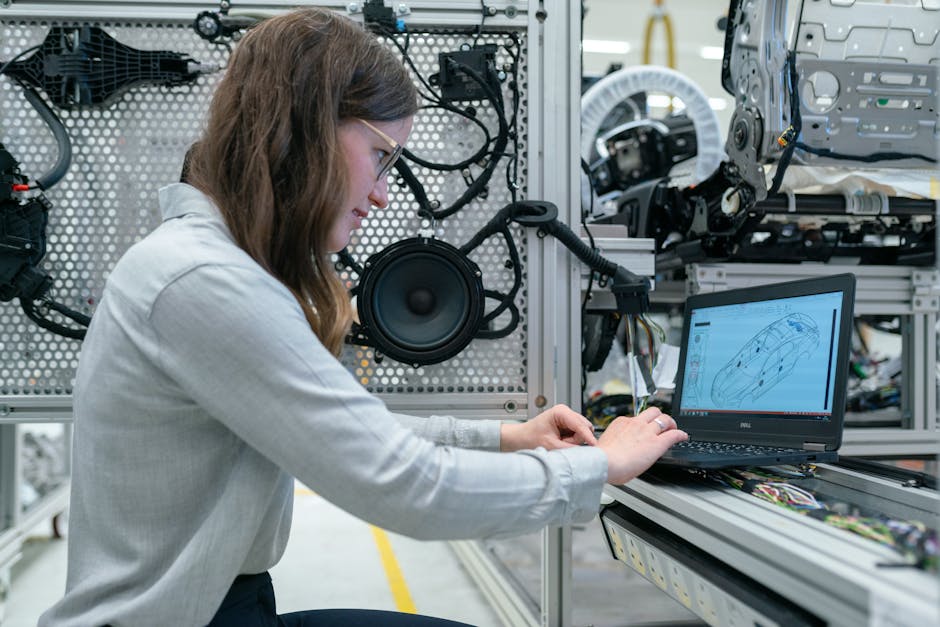
At its heart, the role requires orchestrating thousands of engineers to ensure that abstract concepts become mass-produced realities. John Ternus manages the transition from early research and development to the final assembly line. Consequently, he must balance the aggressive timelines of marketing launches with the unforgiving realities of physics and material science. He does not just review blueprints, he coordinates the entire lifecycle of a product.
Understanding the product development lifecycle
The process follows a rigid structure that ensures quality control across millions of units. When you look at how hardware is designed, you see that it moves through phases. To visualize this, consider the comparison between software and physical product cycles.
| Phase | Primary Focus | Key Deliverable |
|---|---|---|
| Conceptualization | Feasibility and material science | Technology demonstrator |
| Engineering Validation | Testing mechanical tolerances | Working prototype |
| Design Validation | Finalizing manufacturing tools | Golden sample |
| Production Validation | Scaling assembly lines | Retail-ready unit |
From experience, most outsiders underestimate the difficulty of the transition between the Design Validation and Production Validation phases. A common mistake here is assuming that because a prototype works on a bench, it will work in a factory. The part that actually matters is yield optimization, which is the process of minimizing defects during high-volume manufacturing. Key takeaway: Success in hardware depends on perfecting the manufacturing process as much as the initial design.
Navigating the complexity of internal systems
Managing global teams requires sophisticated tools and rigorous documentation. You likely know that Apple utilizes proprietary systems to track their technology components. However, they also rely on industry-standard CAD and simulation software to model thermal dynamics and signal integrity. A practitioner must understand that hardware is never a static target.
Applying simulation for thermal management
Thermal management, the process of dissipating heat from sensitive components, is critical for modern chips. If a device runs too hot, the CPU throttles performance. Therefore, Ternus’s team uses advanced computational fluid dynamics to simulate airflow within chassis designs before a single piece of aluminum is cut. In practice, you might use an open-source tool like OpenFOAM for initial modeling to see how your thermal dissipation performs. Here is a simple Python script concept for calculating heat dissipation requirements:
function calculateHeatDissipation(powerConsumption, surfaceArea, thermalResistance) {
  let deltaT = powerConsumption * thermalResistance;
  return "Required temperature drop is " + deltaT + " degrees Celsius.";
}
console.log(calculateHeatDissipation(15, 0.05, 0.5));
In addition, engineers must account for environmental variables that differ by region. If your device is going to be used in desert climates, your thermal profiles change completely. Furthermore, testing these scenarios requires custom-built environmental chambers. As a result, the engineering team maintains a massive repository of test data. Key takeaway: Thermal design is the invisible boundary that limits the performance of your favorite devices.
Integration of custom silicon into hardware
The pivot to Apple Silicon changed everything for the hardware team. Before this shift, engineers had to design around third-party chip limitations. Now, John Ternus works closely with the silicon team to design hardware that leverages specific instructions in the M-series chips. According to Canalys (2023), Apple’s shift to custom processors has effectively extended the battery life of MacBooks by over 40% compared to legacy architectures.
Why integration matters for performance
This vertical integration allows for a level of optimization that competitors struggle to match. By controlling the entire stack, the hardware team can dictate where transistors are placed to optimize power consumption. If you are a developer, understanding this is vital. It means that the hardware you are writing software for is built to handle specific workloads efficiently. If you want to monitor these performance metrics during your own development, you can use built-in tools like the following code snippet:
const os = require('os');
function checkSystemLoad() {
  const load = os.loadavg();
  console.log("Current system load: " + load[0]);
}
checkSystemLoad();
However, this tight integration comes with a trade-off. It makes the system rigid and harder to upgrade by the end-user. Furthermore, it creates a “walled garden” that forces software developers to adhere to specific architectural guidelines. As a result, the hardware design is fundamentally linked to the operating system’s roadmap. Key takeaway: Vertical integration creates efficiency at the expense of modularity.
Managing global supply chain challenges
The hardware engineering division does not exist in a vacuum. It must interact with the supply chain team to ensure that components like batteries and camera sensors are available in sufficient quantities. John Ternus is responsible for ensuring that the designs his team creates can actually be manufactured at a scale of hundreds of millions of units. Consequently, he spends a significant amount of time aligning engineering goals with manufacturing constraints.
Solving the manufacturing puzzle
When you scale a product, even a microscopic change in the manufacturing process can lead to massive delays. For instance, changing the finish on a casing can impact how long it takes to machine each unit. Therefore, the engineering team must work with suppliers to optimize every micro-second of the process. In addition, they must manage inventory risks for custom components. According to Gartner (2024), successful consumer electronic firms now allocate at least 15% of their budget specifically to supply chain resilience and component testing. Key takeaway: Engineering is useless if the product cannot be manufactured efficiently at scale.
Leadership in the era of new technologies
Looking ahead, the role involves integrating new technologies like augmented reality into the product lineup. John Ternus is currently focused on the transition of hardware for spatial computing. This is not just about making a smaller, faster version of an existing device. It is about rethinking human-computer interaction entirely. Consequently, the hardware must now account for new sensors, displays, and power systems that were not required five years ago.
Moving toward spatial computing
The technical requirements for spatial computing are vastly different from mobile phones. For example, the latency requirements for displays are significantly tighter to prevent motion sickness. In addition, the heat management must be managed in a way that is comfortable for the user to wear on their face. You should recognize that this level of innovation requires a shift in how engineers are trained and managed. Therefore, leadership must focus on cross-disciplinary collaboration. Key takeaway: Hardware engineering is evolving from two-dimensional interfaces to three-dimensional spatial environments.
Ultimately, John Ternus is the person who bridges the gap between Apple’s high-level vision and the reality of physical manufacturing. His role involves deep technical oversight, supply chain management, and the ability to lead thousands of talented engineers through massive shifts in technology. You can see his impact in every product that gets released, from the efficiency of the M-series chips to the durability of the newest titanium frames. While we often focus on the software or the sleek marketing, the true foundation of Apple remains the hardware that houses it all. If you want to learn more about how technology influences our daily lives, check out our resources on technology trends to stay updated. Keep an eye on how these engineering constraints continue to shape the next decade of personal computing by watching the upcoming product cycles closely.
Cover image by: ThisIsEngineering / Pexels